Fade dark patches safely
Supervised depigmenting treatment with a strict sun-protection routine, because protection is half the treatment.
Consultation with photo review. Medicine paid at the pharmacy.
- Doctor reply
- Under 2 hours on average
- Photos
- 1 to 3
The photo review step
The doctor needs 1 to 3 clear photos to confirm the diagnosis and rule out other causes.
- Daylight, facing a window
- No make-up or filters
- Front and each side of the face
Treatment approach
Treatment is chosen by the doctor after the photo review.
Hydroquinone 4% cream
Depigmenting cream applied only on the patches; 60–90-day supervised course.
Hydroquinone 4% gel
Depigmenting gel with glycolic acid for resistant patches; 60–90-day supervised course.
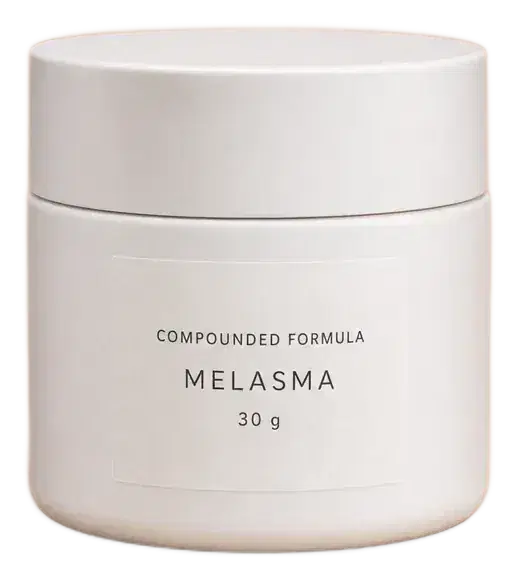
Compounded melasma formula
Pharmacy-compounded night formula used twice a week for 3 months.
What to expect over the weeks
Photo review
The doctor confirms the diagnosis and the plan.
Getting started
Some skin irritation can happen at first.
Gradual fading
Pigment fades slowly with daily use.
Maintenance
The doctor can adjust the routine in the chat.
One consultation, one clear price
You pay for the doctor's consultation. If a prescription is issued, the medicine is paid at your own pharmacy.
- Consultation reviewed by an EU-licensed doctor
- Private follow-up in the in-app chat
- Full refund if the doctor does not approve
Dermatology
- Consultation reviewed by an EU-licensed doctor
- Photo review of your skin
- Electronic prescription if approved
Full refund if a review is not approved
What to know before your consultation
Melasma and depigmenting treatment
Melasma causes symmetrical brown or grey-brown patches, usually on the cheeks, forehead, upper lip or chin. Sun exposure, pregnancy, hormonal contraception and family history all play a part, and several factors often combine. The doctor may consider hydroquinone 4% cream applied only to the patches, hydroquinone 4% gel with glycolic acid for resistant patches, or a pharmacy-compounded combination of hydroquinone with a low-strength retinoid, kojic acid and niacinamide. Strict daily sun protection is part of every plan.
Who the melasma consultation suits
The melasma consultation is for adults with the typical symmetrical pattern of patches, confirmed by the doctor from photos. A single dark spot, an irregular or changing mark, or a spot that bleeds or itches needs an in-person check, because it could be something other than melasma. Hydroquinone and retinoids are not prescribed during pregnancy, while trying to conceive or while breastfeeding. Melasma that started in pregnancy is managed with sun protection first, and the doctor can reassess once pregnancy and breastfeeding are over.
Safety of melasma treatment
Mild burning, redness and dryness on the patches are common early on, and a lighter halo can appear if the product spreads onto surrounding skin. Prolonged hydroquinone use can cause ochronosis, a blue-grey darkening of the skin reported mainly with use beyond 6 months, so the product information sets that as the limit and advises stopping if there is no improvement at 2 months. The gel contains sulfites, which can rarely cause allergic reactions. Stop and contact the doctor if treated skin darkens, and seek urgent care for facial swelling or breathing difficulty.
Sun protection and other options
Because sunlight drives melasma, broad-spectrum sunscreen every morning, reapplied outdoors, with a hat and shade, is the foundation of care and continues after treatment. An international expert consensus treats chemical peels as a second-line option and advises that lasers are rarely used, and both are done in person by a dermatologist. Reviewing a possible trigger, such as hormonal contraception, with your own doctor may also help. If the doctor decides a prescription is not appropriate, they explain why and the consultation fee is refunded in full.
What melasma studies show
An international consensus from the Pigmentary Disorders Academy recommends topical depigmenting treatment as first line, preferring triple combinations, with hydroquinone 4% alone as an alternative. In two 8-week trials of 641 adults with moderate to severe facial melasma, 26.1% of people using a triple combination of hydroquinone, tretinoin and a corticosteroid had complete clearing, compared with 4.6% on two-ingredient combinations. The compounded formula used here replaces the corticosteroid with kojic acid and niacinamide and is applied less often, so those results do not transfer to it directly. Hydroquinone 4% cream and gel hold national authorisations as prescription medicines for melasma.
Your melasma consultation, step by step
You answer a melasma questionnaire about when the patches appeared, sun exposure, pregnancy, contraception and products you already use. A clear photo is required, showing the whole face and a close-up of the patches in daylight without make-up, which also gives a baseline for your review. An EU-licensed doctor reviews everything and writes to you in the private chat if anything is unclear. If treatment is appropriate, you receive an electronic prescription. The cream or gel is dispensed at your pharmacy, a compounded formula takes a few days to prepare, and you pay the pharmacy directly.
Courses, breaks and maintenance
Hydroquinone is used in supervised courses, usually 60 to 90 days, with a photo review at around 2 months. The doctor then decides on a break, maintenance or a different approach, and continuous hydroquinone use never goes beyond 6 months. The lightening is temporary if sun exposure resumes, and melasma often returns, so sun protection continues all year. Write to the doctor in the chat if patches darken, irritation persists or you become pregnant.
Sources
- J Eur Acad Dermatol Venereol (PubMed 19486232). A global survey of the role of ultraviolet radiation and hormonal influences in the development of melasma (Ortonne JP et al., J Eur Acad Dermatol Venereol 2009) (2009)
- National medicines regulator product information database (CIMA). HQUIN 40 mg/g crema (hydroquinone 4%): ficha técnica (SmPC) (2024)
- National medicines regulator product information database (CIMA). Licoforte 40 mg/g gel (hydroquinone 4% with glycolic acid): ficha técnica (SmPC) (2024)
- National medicines regulator product information database (CIMA). Retirides 0.5 mg/g crema (tretinoin 0.05%): ficha técnica (SmPC) (2024)
- Journal of the American Academy of Dermatology (PubMed 16631968). Treatment of melasma: Pigmentary Disorders Academy consensus (Rendon M et al., J Am Acad Dermatol 2006;54(5 Suppl 2):S272-281) (2006)
- Cutis (PubMed 12889718). Efficacy and safety of a new triple-combination agent for facial melasma: two 8-week randomised investigator-blind studies (Taylor SC et al., Cutis 2003;72(1):67-72) (2003)
Sources checked on September 29, 2026
Your questions answered
Who is the melasma consultation for?
Which melasma treatments can the doctor prescribe?
Do I need to send photos?
How long until the patches fade?
Why is sun protection half the treatment?
Can I treat melasma while pregnant or breastfeeding?
What does it cost, and what happens after the course?
How do I apply a hydroquinone treatment?
Which side effects should I report?
Can hormonal contraception make melasma worse?
Are peels or laser an option for melasma?
Even skin tone starts here
A doctor reviews your photos and replies in under 2 hours on average.
Start melasma consultationNo charge unless a doctor approves your treatment.
Pay nothing if a doctor doesn't approve your treatment. Every consultation is fully refundable. How refunds work