Safety information · Internal patient-safety page
Tretinoin safety summary
Topical tretinoin is a prescription retinoid used for fine lines and rough, sun-damaged skin under medical supervision.
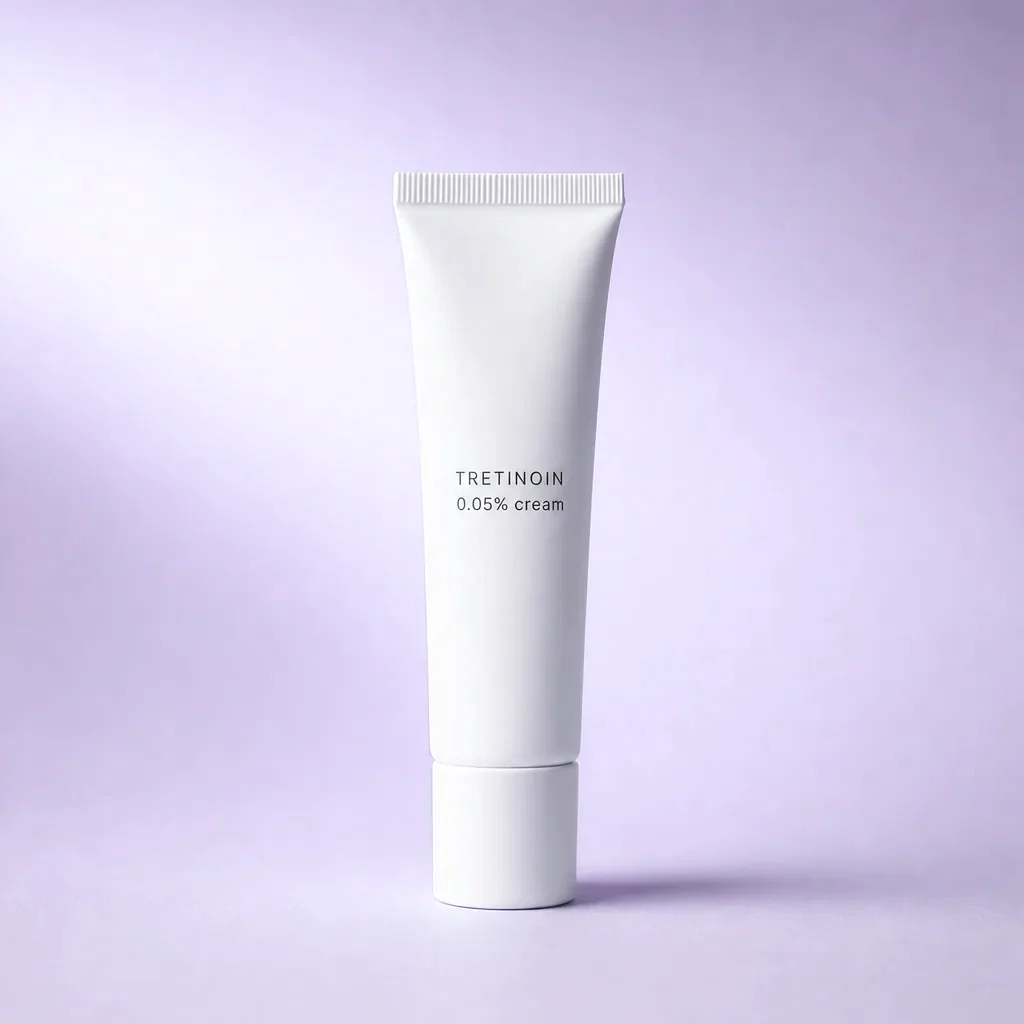
What it's used for
- Use only as prescribed on the affected skin.
- Follow the treatment plan and review schedule your doctor gives you.
Most common side effects
- Dryness, redness, peeling, warmth, burning or stinging.
- Temporary irritation while the skin adjusts.
Serious side effects: stop and seek care
- Blistering, crusting, severe swelling or intense persistent irritation.
- A severe allergic reaction or unexpected change in a skin lesion.
Who should not use it
- Pregnancy, trying to conceive, or a personal or family history of skin cancer.
- Active eczema, sunburn, broken skin or allergy to tretinoin or the cream ingredients.
Interactions to flag
- Do not combine with another retinoid; separate exfoliants, acids, peroxide and depilatory products.
- Tell the doctor about photosensitising medicines and recent skin procedures.
Message us in the app chat if you notice any of these
- Irritation is intense despite following the reduced-frequency plan.
- You become pregnant, start a photosensitising medicine or plan a skin procedure.
AEMPS CIMA: Retirides 0.5 mg/g cream
Back to your consultationThis page summarises information from the regulator-approved leaflet for reference only. It is not medical advice and does not replace the assessment of an EU-licensed doctor. Your doctor will review your individual history, dose and interactions during your consultation.